
Most investors chasing the gaming market look for the next big spectacle—blockbuster graphics, massive multiplayer worlds, Hollywood budgets. They miss the category quietly printing money right below their noses.
Idle games—also called incremental games—pulled in over $3 billion in mobile revenue in 2025, and 2026 looks even bigger. These are games where tapping a cookie, running a virtual mine, or building a digital empire drives daily sessions. Players come back not because they have to, but because they want to see what grew while they were away.
For new investors entering mobile right now, idle game development offers something rare: a proven psychological model, a low production barrier, and a monetization structure that ages well. You don’t need to out-spend EA. You need to out-think the dopamine loop.
This is where we come in.
The Psychology of “The Pop”
There’s a moment in bubble-shooter games where you line up the perfect shot, fire, and trigger a chain reaction. Bubbles cascade. The screen clears. That sound plays. Players describe it as deeply satisfying in a way that bigger, more complex games rarely match.
That satisfaction is not accidental. It’s architectural.
The pop sound, the visual chain reaction, the sudden burst of cleared space—all of it sends one precise signal to the brain: you imposed order on chaos. The brain registers this as a small win and immediately scans for the next one. This is why casual players sit down for five minutes and look up forty-five minutes later.
Bubble Town is a textbook example of this design done right. The alluring pop sound and chain reactions don’t just feel good—they create focus and a sense of control. Every cleared cluster is a tiny completed task. The brain loves completed tasks.
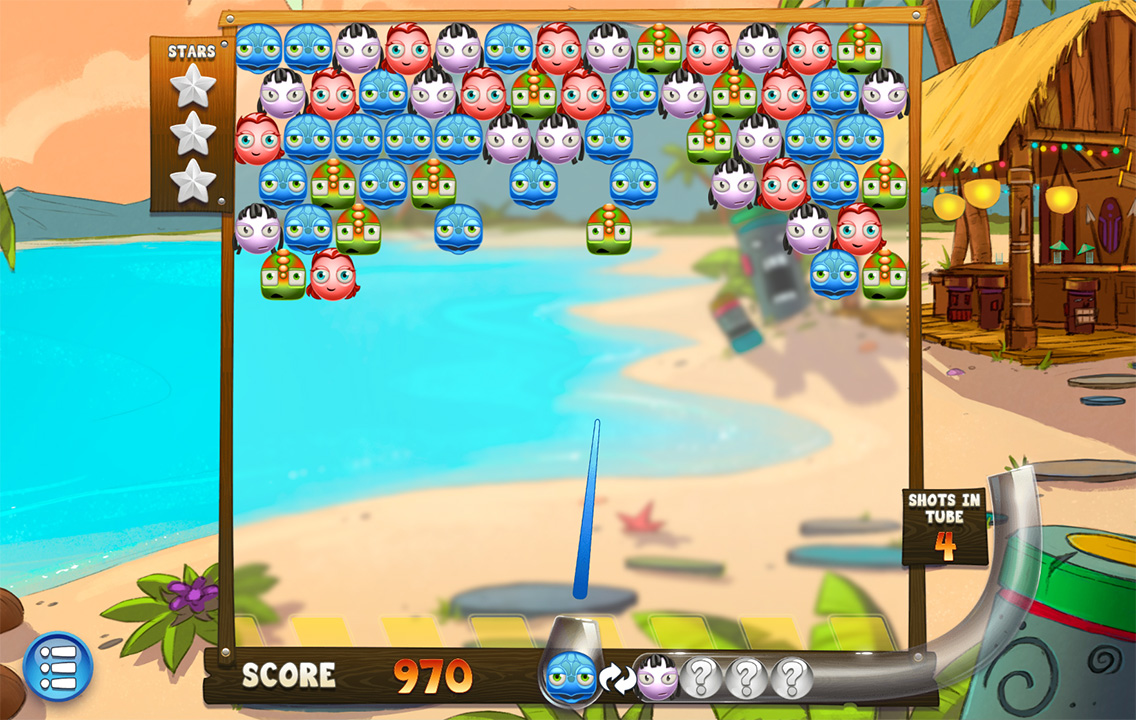
Idle game development borrows this exact psychology and stretches it across weeks and months.
Instead of popping bubbles, you watch your gold mine produce ore every second. Instead of a chain reaction clearing a board, you unlock a new production tier that multiplies your output by ten. The “pop” becomes a progress notification. The chain reaction becomes a compounding resource curve. The cleared screen becomes a freshly upgraded factory floor.
Both satisfy the same human need: to see the world respond to your decisions and grow in a direction you chose. The key difference is time. A bubble game delivers that hit in three seconds. A well-designed idle game delivers it every day for three months. That’s not just good game design—that’s a retention engine.
The Math Behind the Magic
Here’s what separates a forgettable idle game from a franchise: the economy.
Every number in a well-built idle game is a deliberate design decision. How fast does resource production scale? When does a new upgrade feel achievable but not trivial? When does the prestige system reset the player—and how much reward justifies starting over?
These aren’t creative questions. They’re mathematical ones, and getting them wrong kills games that looked good on paper.
The two most common failure modes are:
- The dead zone — a stretch in the progression curve where nothing meaningful happens. Players drift, and they don’t come back.
- Runaway inflation — numbers scale so fast that the sense of achievement disappears into abstraction. Players feel nothing.
A great idle game is a precision-tuned economic model. The visual layer is the interface. The economy is the product.
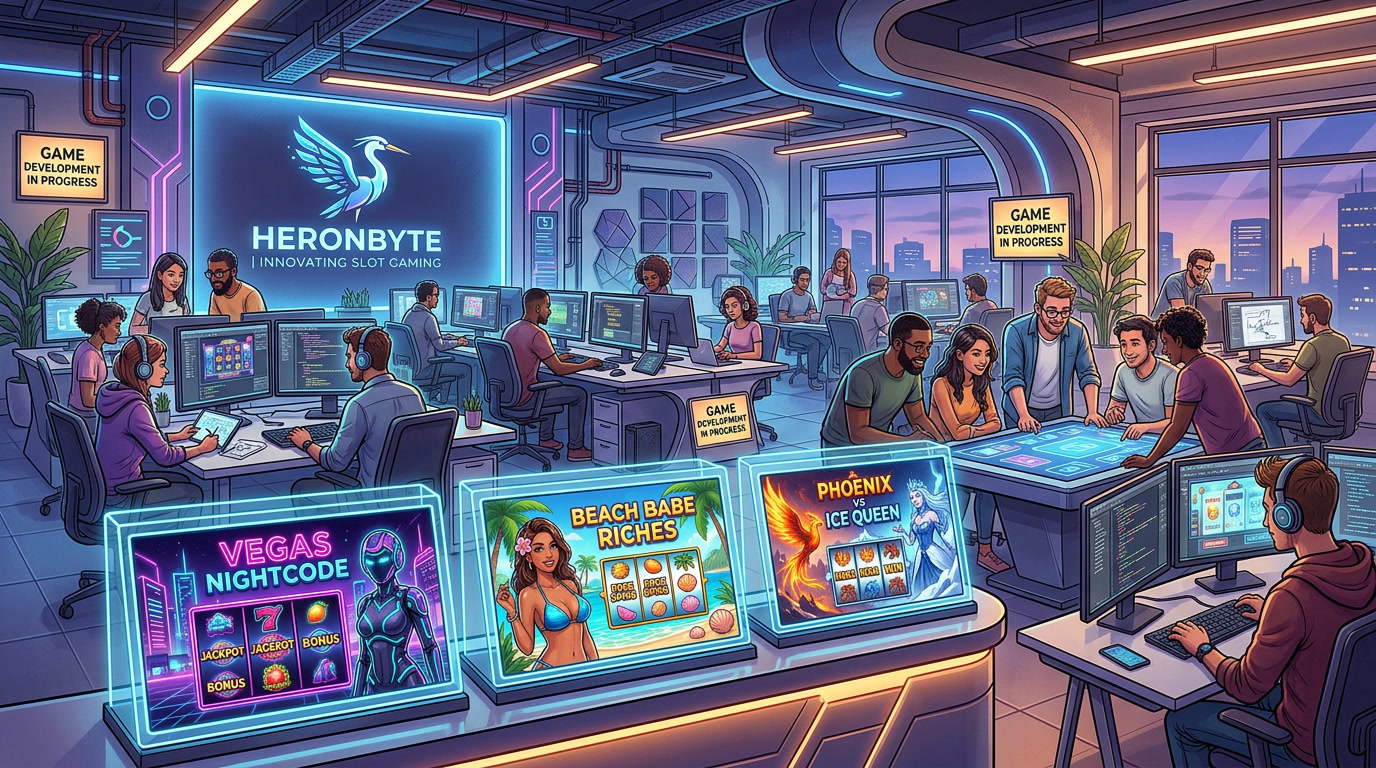
Our studio handles all of it. We build and stress-test the balance before a single pixel of UI is drawn. You focus on the vision. We handle the math.
Platform Versatility
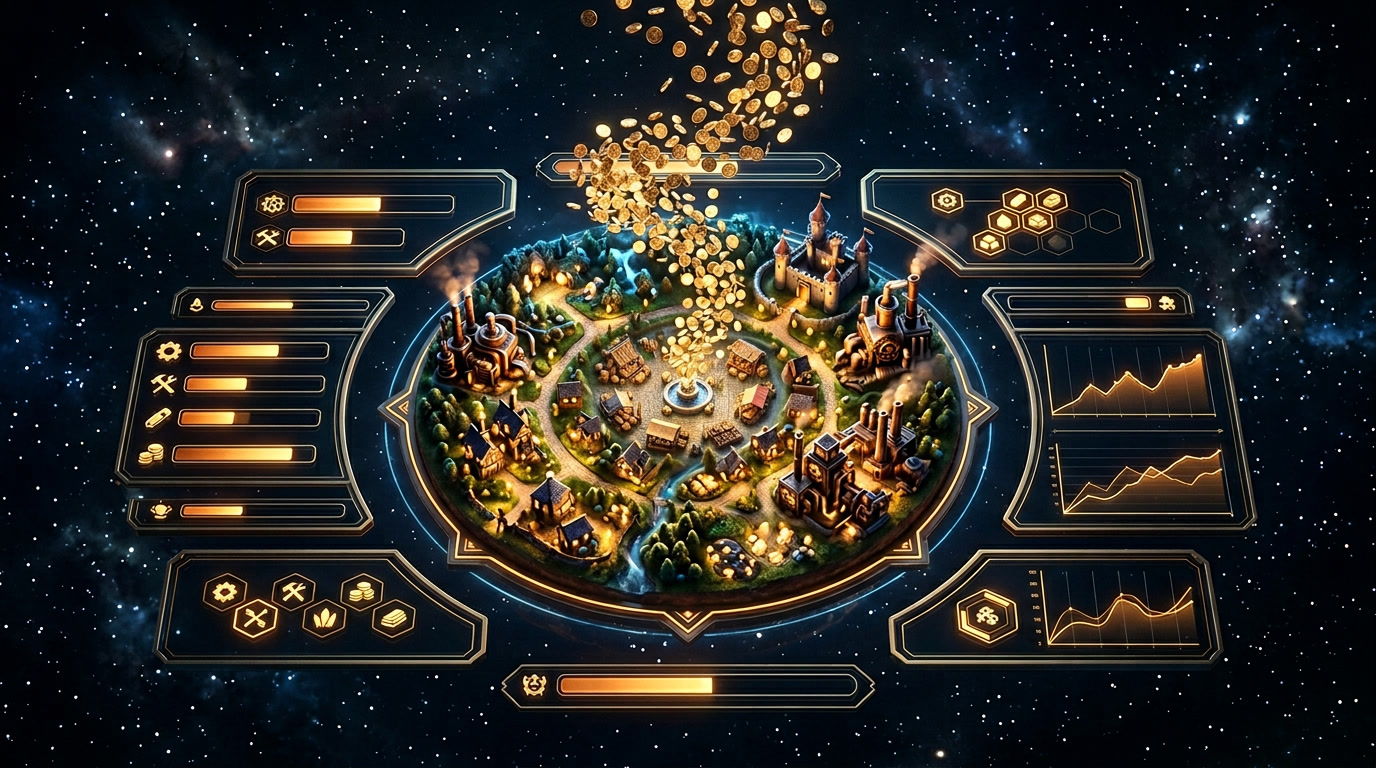
One of the biggest structural advantages of idle game development in 2026 is that the format works everywhere. Here’s a quick comparison of the three main deployment targets:
| Platform | Audience Size | Monetization Model | Entry Barrier |
|---|---|---|---|
| iOS / Android | 3+ billion devices | IAP + ads | Medium |
| Telegram Web Apps (TWA) | 900M+ active users | Viral + token mechanics | Low |
| Web Browser | Broad, no install | Ads + subscriptions | Low |
The most interesting story right now is Telegram Mini App development. The Telegram gaming ecosystem has exploded, with titles pulling tens of millions of players into Web App-based idle mechanics. Friction to play is near zero—no download, no account creation, just a tap inside a chat app that a billion people already use. For an investor who wants fast user acquisition at a fraction of traditional mobile costs, this channel is worth taking seriously.
We build for all three. The same core game mechanics and economy we design for a polished iOS release can be adapted for Telegram deployment, letting you capture multiple audiences from one product investment.
From Concept to Cash Flow
We don’t hand clients a 60-page document and a wish. Here’s how a project moves from your idea to a live, monetizing product:
Step 1 — Discovery We sit down with you to understand your market target, monetization goals, and the theme you want to build around. We translate that into a Game Design Document. You review and approve it before we write a single line of code.
Step 2 — Prototype We build a playable build with the core loop, early progression, and basic economy active. This is where you feel the game before committing to full production. Changes here cost days. Changes after launch cost you users.
Step 3 — Soft Launch We release to a limited market to gather real retention data. Day 1, Day 7, and Day 30 figures tell us exactly where the economy needs tuning and where players disengage. We iterate before going wide.
Step 4 — Scaling With validated retention numbers in hand, we prepare for global release and connect you with user acquisition partners. At this stage, you have a product with proven metrics—a very different conversation to have with ad networks than “we think this will work.”
Why Idle Games Are a Smart Investment Right Now
Here’s a side-by-side look at how idle games compare to other popular mobile genres on the metrics that matter most to investors:
| Genre | Avg. Dev Cost | Day-30 Retention | Monetization Complexity | Time to Market |
|---|---|---|---|---|
| Idle / Incremental | Low–Medium | 15–25% | Low | 4–8 months |
| Hyper-Casual | Low | 5–10% | Very Low | 2–4 months |
| Mid-Core RPG | High | 20–35% | High | 12–24 months |
| Match-3 | Medium | 12–20% | Medium | 6–12 months |
Idle games sit in a sweet spot: strong retention without the development cost or timeline of a mid-core title. They are also naturally suited to the effective monetization models that modern mobile players accept—speed-up purchases, cosmetic upgrades, and optional ad watching that never feels forced.
If you want to understand the broader shift happening in mobile right now, our breakdown of new monetization models is worth a read.
Why the Window Is Open Right Now
Several trends are converging in 2026 that make this moment unusually good for entering the idle space:
- Telegram’s gaming ecosystem is still early-stage, meaning user acquisition costs are a fraction of what iOS/Android demand
- AI-assisted art pipelines have cut idle game production costs by 30–40% compared to 2023
- The hyper-casual game development boom has trained a massive global audience to enjoy short, satisfying game sessions—exactly the audience idle games are built for
- Prestige mechanics and seasonal content have extended the average lifetime of idle titles well beyond what the genre managed five years ago
The players are ready. The platforms are built. The market gap is real.
Don’t Just Play the Market — Own a Piece of It
You bring the concept. We bring the craft.
If you’re seriously considering a mobile gaming investment in 2026, the window for entering the idle space at reasonable production costs is open right now. But it won’t stay open.
Book a strategy call with our team. In one hour, we’ll scope your concept, give you a realistic production estimate, and show you exactly what your ROI timeline could look like. No obligation. Just clarity.
The gold rush is on. The question is whether you’re playing the game or building it.
For more on what drives player behavior, read our guide on what makes a gaming experience satisfying. To explore the development process in detail, visit our overview of the 6 key game development stages.