
Digital sports formats have completely changed the way that sports media is discussed in the last decade, as digital formats have replaced a large part of the old form of discussing games. Fans can now look at every single detail of a game when they want (on-demand tactical analysis), using their smartphones or other social media platforms to watch podcasts, live stream games, and view videos. The more people watch the Internet through mobile devices—especially those living in countries such as Iran and Afghanistan—the more likely it is that these fans will have access to all the same types of football debates (commentary about domestic leagues and international matches) through their mobile devices and social platforms.
Growth of Sports Podcasts in the Digital Era
Podcasting’s global growth has made significant impacts on both the creation and the use of sports-based talk radio. Edison Research reported that there are over 460 million people who regularly listen to podcasts. Sports programming has been among the fastest-growing podcast genres.
When sports commentators on podcasts speak about upcoming games or games which have recently been completed, they typically reference information from an outside source. While discussing statistics and odds related to recent games, many times the commentators will reference odds information available on a betting site (Arabic: معتبر ترین سایت شرط بندی جهان) . Users can access this website to look at various wagering options for different leagues, compare odds while watching a game live, and make bets on the outcome of football games directly from the match page. The website includes tools to view league standings, recent results of each team, and real time odds changes arranged in clearly labeled panels. As a result, the commentators can reference fans’ betting behavior, changes in the likelihood of a particular event occurring and statistical trends as they provide their opinions about the game and tournament action.
Most sports based radio shows include some type of journalism and include listener perspective. Most sports-based radio shows covering the top professional leagues in football have releases immediately after the end of a match. These releases provide an analysis of the most important strategic moves by the players and coaches involved in the match. Controversial referee calls were also often discussed. Programs covering football matches in areas of the world with a high level of interest in the sport often concentrate on regional leagues, the AFC Champions League and international competitions featuring national teams representing Asia.
Several factors explain the rapid expansion of sports podcast audiences:
- Growing smartphone access and mobile internet coverage
- The popularity of on‑demand audio formats
- Independent content creators producing niche sports analysis
- Integration of podcasts with streaming platforms and social media
These conditions have created an environment where fans can access expert commentary and tactical discussions at any time. Podcast production cycles are also significantly faster than traditional television analysis. Podcasts covering major events in tournaments like the UEFA Champions League or AFC Champions League get published within hours of the last whistle. Analysts have to make sense of substitutions and pressing structures, defensive transitions, refereeing decisions, and review the match stats along with the video footage. This speed allows online programs to react immediately to developments in international football.
Social Media Platforms and Match Analysis Communities
Digital discussions about football matches usually occur alongside social platforms. Many podcasts distribute clips, episode highlights, and tactical diagrams through social media channels that help expand their audience beyond traditional listeners.
Online football communities often discuss and share observations regarding specific matches on forums, and on MelBet Facebook Iran, summaries of previous international matches, replays, and statistics go viral among Persian-language sports communities. Moreover, the page provides match schedules, team lineups, and brief analysis posts to assist followers in grasping the important actions and underlying reasons for certain tactical choices.
These digital spaces operate as informal analysis forums. Supporters interact with one another using online platforms to analyze specific aspects of games, such as highlight videos, debates on controversial referee decisions, and evaluations of key performance indicators. Participation in these forums, particularly with regard to tournaments like the AFC Asian Cup and FIFA World Cup qualifiers, can span several hours or even several days.
Formats Used in Modern Sports Podcasts
Podcast producers employ multiple digital formats so that match discussions remain available to audiences. While initial sports podcasts imitated radio talk shows, today’s podcasts are far more advanced and incorporate diverse forms of media such as video, statistics, infographics, and audience participation.
Common podcast formats include:
- Post‑match analysis episodes reviewing tactical decisions and player performances.
- Preview shows discussing upcoming fixtures and strategic matchups.
- Interview programs featuring former players, coaches, or analysts.
- Fan discussion panels reflecting supporter perspectives on league developments.
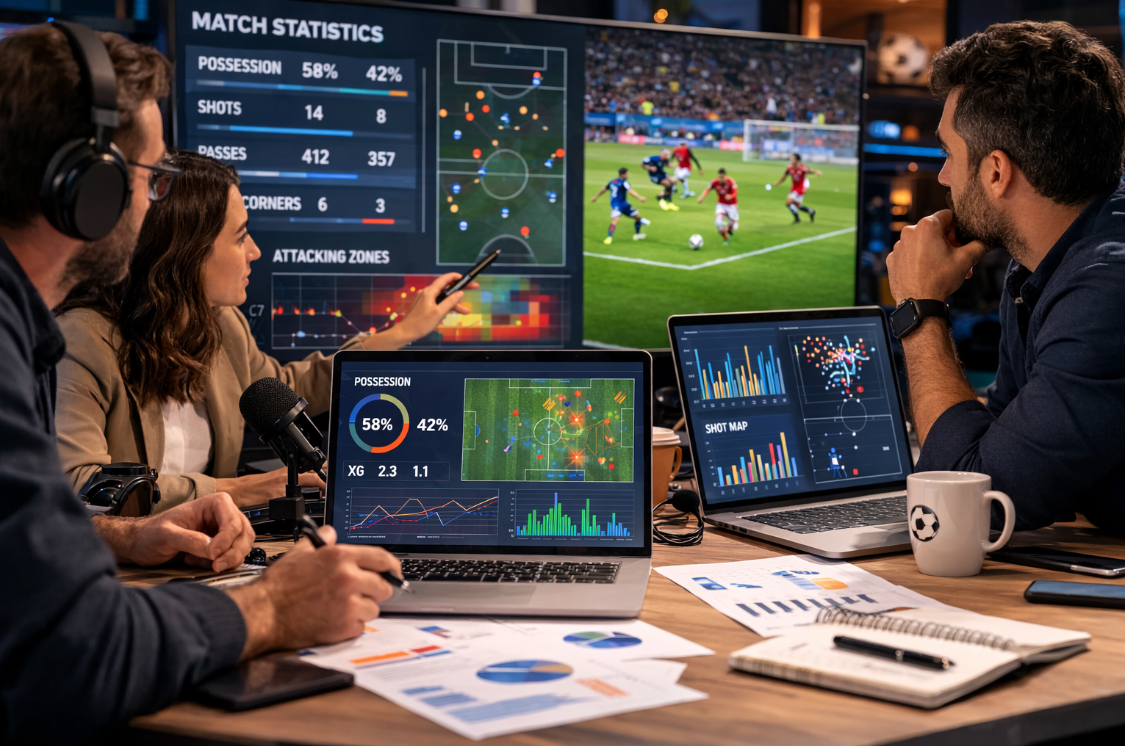
Podcasts which are often based upon an analysis style podcast and a community perspective podcast have been growing in number and popularity. There has also been an upward trend in video podcasts being added to both YouTube and Spotify. Many hosts of these podcasts utilize visual aids as they provide spoken commentary as well as add a visual element with tactical board displays, video replay footage of critical plays or segments of a game, and player positioning graphics. The addition of visual elements is very beneficial to explain the tactics of a team or individual to an audience that may typically not be interested in analyzing the strategies employed by teams in a given sport (football).
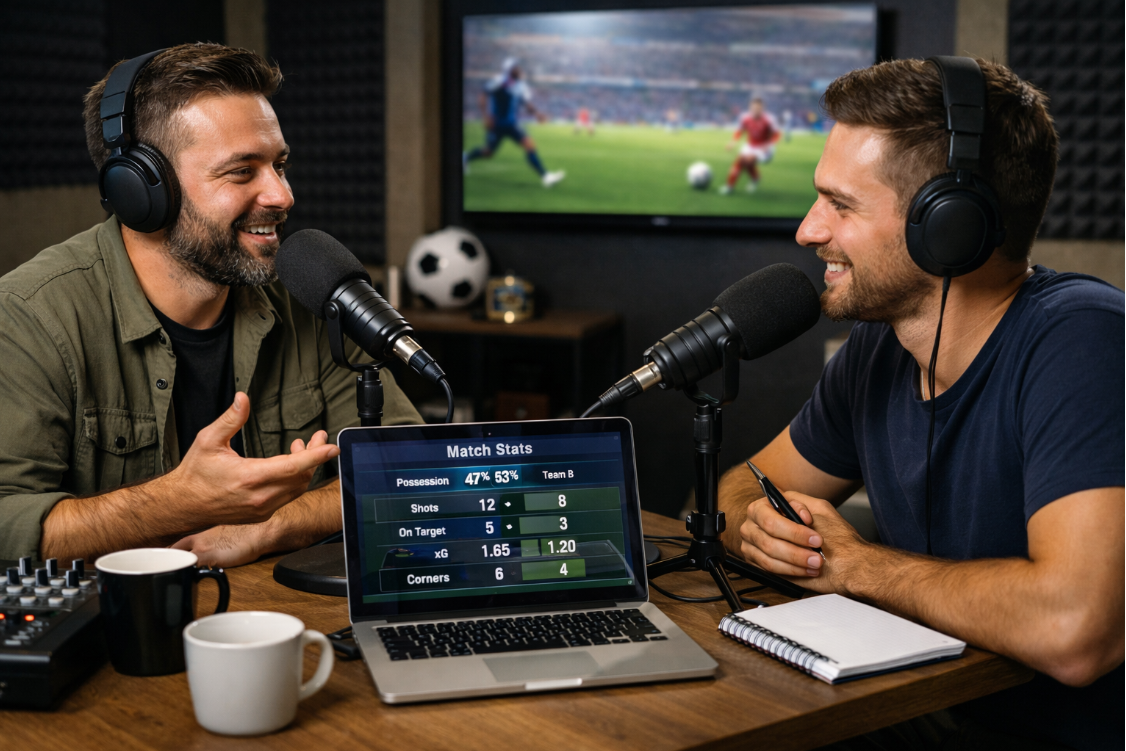
Podcasts often include match statistical information and graphic display of additional data correlated to the verbal commentary provided by analysts. Frequently, analysts will reference expected-goals model numbers, possession numbers and player tracking data when discussing the tactical decisions made during the course of an important game.
Role of Data and Analytics in Podcast Discussions
The use of prediction tools to analyze match outcomes is becoming a trend in sports podcasts. Analysts are able to obtain performance-related metrics through football analytics tools like Opta, StatsBomb, and Wyscout, which then assist in defining and explaining the intricacies of team tactical frameworks.
As an example of approaches in this field, expected goals (xG) models gauge the likelihood of an attempt becoming a goal, taking into account previous occurrences of the same type of attempt. Analysts in the podcasting field use this type of modeling to evaluate the extent to which a team generated worthwhile scoring chances or, conversely, the extent to which a team had scoring attempts with a low likelihood of success during the course of a game.
| Analytical Metric | Purpose in Match Discussion |
| Expected Goals (xG) | Measures the quality of scoring chances |
| Possession Percentage | Indicates control of the match tempo |
| Pass Completion Rate | Evaluates midfield organization |
| Defensive Actions | Tracks interceptions, tackles, and clearances |
Subjective reactions are contrasted to objective statistical measures of performance, such as those provided by analytical models. For example, during the past two years, we’ve seen a growing number of analysts apply statistical analysis to their commentary and discussion of major competitions (i.e. the UEFA Champions League knockout stages and the AFC Asian Cup).
In comparing a team’s possession percentage to the number of “progressive” passes, final-third entries, or defensive recoveries, the analyst can demonstrate that a team’s territorial control produced some level of attacking pressure. The analysis provides a means to allow fans to understand the nuance of a match, and not solely the result. The reliance of post-match analyses to utilize data is also evident; it provides a basis for a more logical interpretation of a match than a series of sporadic highlights or generalized opinions.
Future of Digital Match Discussions
Digital broadcast growth in Asia and the Middle East has created a strong potential for continued success of sports podcasting formats. Analysts, journalists, and global football enthusiasts create a shared community that combines both social media commentary and video-audio content.
Podcasting (digital match analysis) will continue to be an important component of the football media landscape due to its evolution in digital content. Streaming services now combine audio content (podcasts), video clips (snippets), and live data feeds providing fans with more comprehensive explanations of specific match events.
There are also already clear indicators of how Artificial Intelligence (AI) technologies have impacted sports commentary. For example, some platforms provide automated summary statistics immediately after each game. These statistics can then be used by analysts as they discuss the games in their podcasts. AI and automated data processing will most certainly shape the next step in the development of sports media.