

The online casino market in the United States is currently experiencing a gold rush unlike anything we’ve seen since the expansion of commercial casinos in the 1990s. This, of course, is the result of the legalisation of gambling across the United States that has quickly and deeply expanded upon existing exemptions for major casinos in Nevada and New Jersey (Vegas and Atlantic City, respectively) and boat-based casinos just off the US mainland. These new legislations have opened up state-wide sports betting, the establishment of new casinos and gambling dens, and perhaps most importantly, online gambling.
Why iGaming Has the Edge

While sports betting often grabs the headlines for understandable reasons, it’s worth noting that it is iGaming (online slots and table games) that has quietly become the true financial engine of the industry.
In the number of states where online gambling has already been made legal, such as New Jersey and Pennsylvania, revenue records are shattered almost monthly, proving that Americans have a massive appetite not just for gambling, in general, but specifically for digital gaming.
But why, exactly, is this sector seeing such explosive success? The reasons, as you may expect, go far beyond simple entertainment:
- Unmatched Convenience: The primary driver for iGaming over other forms of gambling is its accessibility. Players no longer need to travel to a physical location to play a few hands of blackjack or spin a slot reel; not even if that casino resides in their state, even in their town. The casino is now in their pocket, available 24/7, fitting perfectly into the on-demand culture of modern life. They can also use whichever payment method they choose out of dozens available. Note the rapid rise in PayPal casino options, as one of the most popular e-transfer sites has thrown its weight behind this new phenomenon. Most online casino users appreciate the fact that payment options are more varied than at a brick-and-mortar establishment, and is just another reason why the market continues to rise in popularity.
- State Revenue Generation: The legalization of gambling isn’t just about the individuals gambling or the owners of casinos or gambling games, but is a huge tax windfall for state governments, too. And it’s here that iGaming has the obvious advantage over sports betting. Online slots and table games generally operate at a higher margin and volume than sports betting, meaning significantly more tax dollars for education, infrastructure, and public services.
- Technological Innovation: Modern apps are sleek, secure, and engaging. The rise of “Live Dealer” games—where real human dealers are streamed to user devices—has bridged the gap between the social atmosphere of a physical casino and the comfort of kicking back and chilling in your own home.
Because of this extraordinary success, new markets nationwide are constantly looking to join the fold. While states like New York and Maryland are weighing the benefits, one state is making specific legislative strides right now: Virginia.
Virginia Edges Closer to Legalization with SB 118
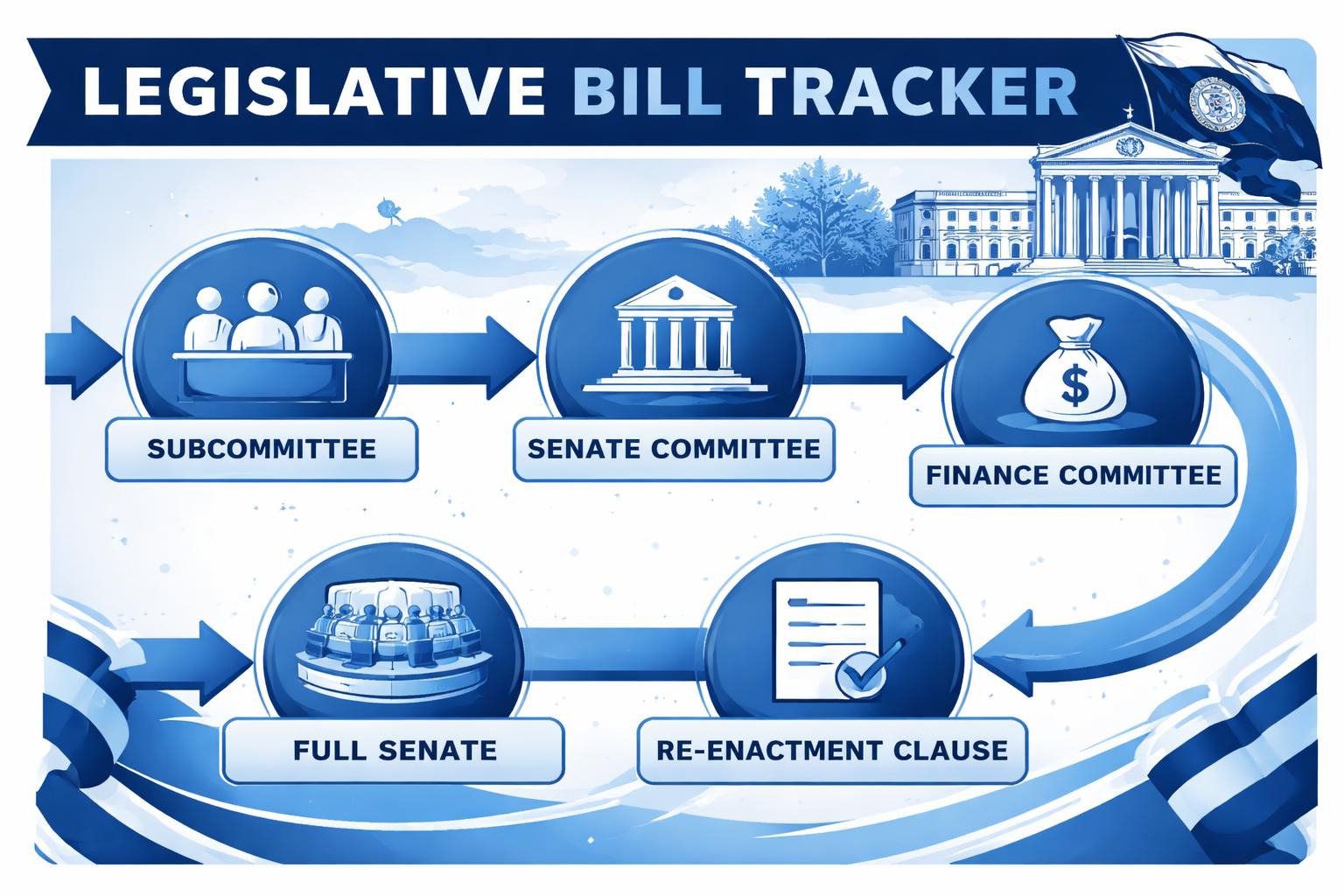
Virginia is one of the most significant states that has already embraced sports betting and is rolling out land-based casinos. Which means that iGaming is the logical next step for the state, but legally, it’s not quite there just yet. Recent developments in the state legislature suggest that Virginians might be getting closer, though, to being able to play all sorts of iGames legally on their phones. The path to get there, though, remains long and winding, but there’s little to suggest that it’s a matter of “if” not “when”.
In terms of state legislature, the main focus is now on SB 118. This bill, though controversial, has still managed to survive early scepticism and has managed to stay alive in the Senate. Significantly, the Senate Committee on General Laws and Technology recent voted 9 to 6 to send the bill to the Senate Finance Committee.
This vote, which represents a huge gain for the iGaming industry, came after the committee adopted a substantially revised substitute for the bill. These long-awaited but crucial revisions will strengthen consumer protections and will implement stricter responsible-gaming requirements. These were key concerns to many lawmakers and with such protections in place, both lawmakers and the public can rest easier knowing that irresponsible gambling won’t sink the whole enterprise, and ruin untold lives, in the long run.
The sudden progression of SB 118 is particularly noteworthy after having had such a rocky start. Just last week, in fact, the bill failed to receive majority support in a subcommittee vote, falling with 3-4 against with one abstention.
However, 3-4 isn’t 0-4, and the full committee demonstrably saw enough merit in the revised proposal to consider pushing it forward. More than just consumer protections, the revised bill also proposed a tax rate on adjusted gross revenue for operators, which would in turn funnel significant funds into the state coffers.
Still, even with all this progress, it is not a done deal yet.
Even if SB 118 navigates the Finance Committee and passes the full Senate and House, it still includes a re-enactment clause. What this means, in effect, is that the issue would need to be revisited and voted on again in a whole other legislative session before any apps could actually launch. This is very likely, though certainly not guaranteed to happen soon.
The Inevitable Rise of iGaming
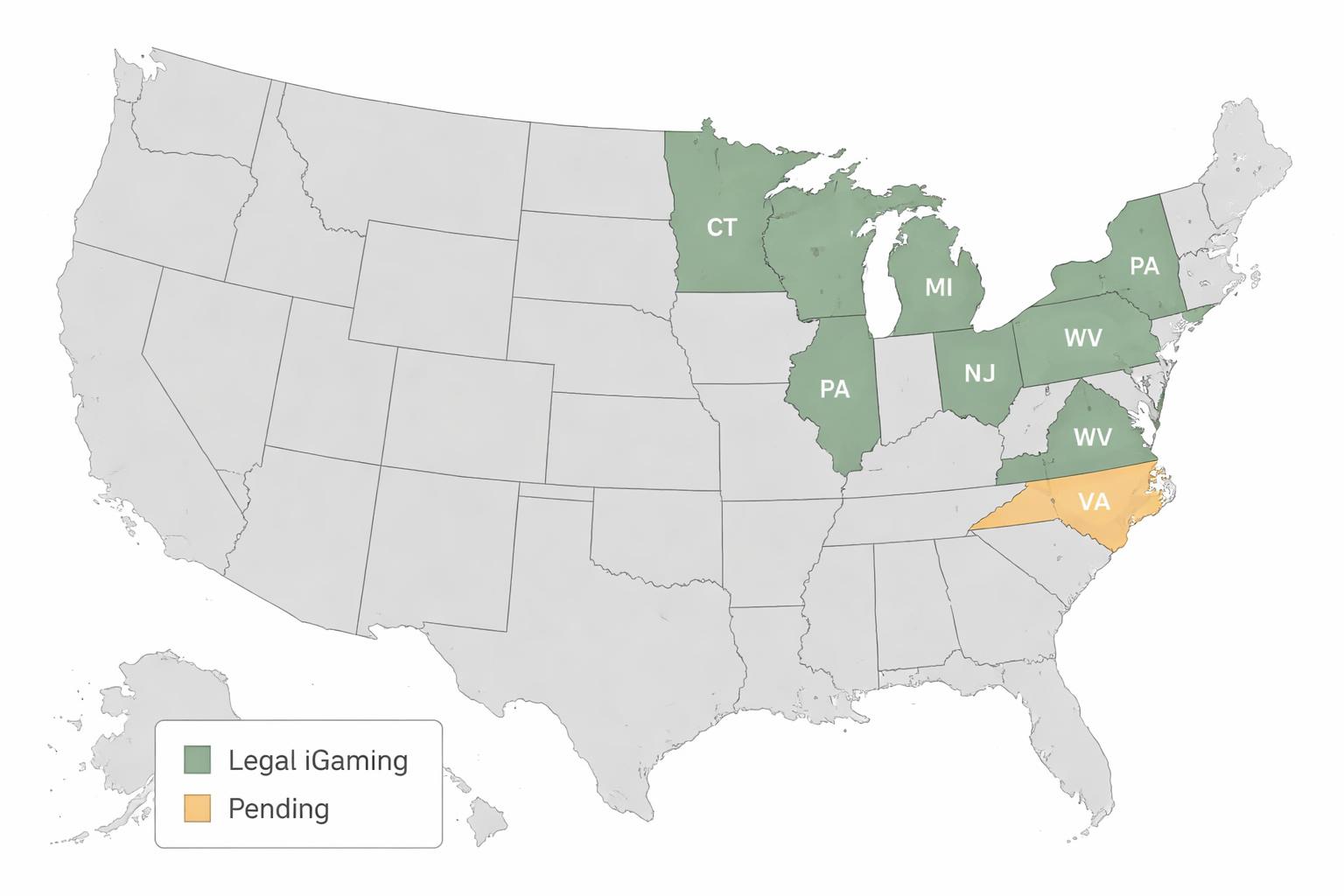
🎰 States with Legal iGaming
| State | Online Casino Legal? | Notes |
|---|---|---|
| Connecticut | Yes | Online slots & table games |
| Delaware | Yes | State-run platform |
| Michigan | Yes | Full iGaming + poker |
| New Jersey | Yes | Large regulated market |
| Pennsylvania | Yes | Full iGaming |
| West Virginia | Yes | Full iGaming |
What is happening in Virginia is proof that the legislative journey for online casinos is rarely a straight line, and each process is invariably quite different from one another, all depending on the state and the makeup of its particular legislature. It involves complex negotiations, close votes like the 3-4 subcommittee split, and constant amendments to satisfy safety concerns. And this isn’t even considering the vastly different approaches that Republican and Democrat lawmakers may have towards both getting laws passed and about the legalisation of online gambling in particular.
Yet, the trajectory is clear. And aside for only a handful of states in the middle and Southern parts of the nations, it’s all but inevitable. The genie is well and truly out of the bottle. As Virginia pushes SB 118 forward, it joins a growing list of states realizing that not only does gambling happen even when it has been illegal, its digital shift is inevitable. People are already playing online—often on unregulated, offshore sites that offer zero consumer protection or tax revenue. This isn’t good for the states and it isn’t good for the consumers.
By bringing this activity into the light, states like Virginia are acknowledging that regulation is the only path forward, while admitting at the same time that despite any remaining legal hoops, the future of American gambling is undeniably digital.