
A gamer’s honest guide to portable powerhouses — what to look for, what to skip, and which devices are actually worth your money this year.
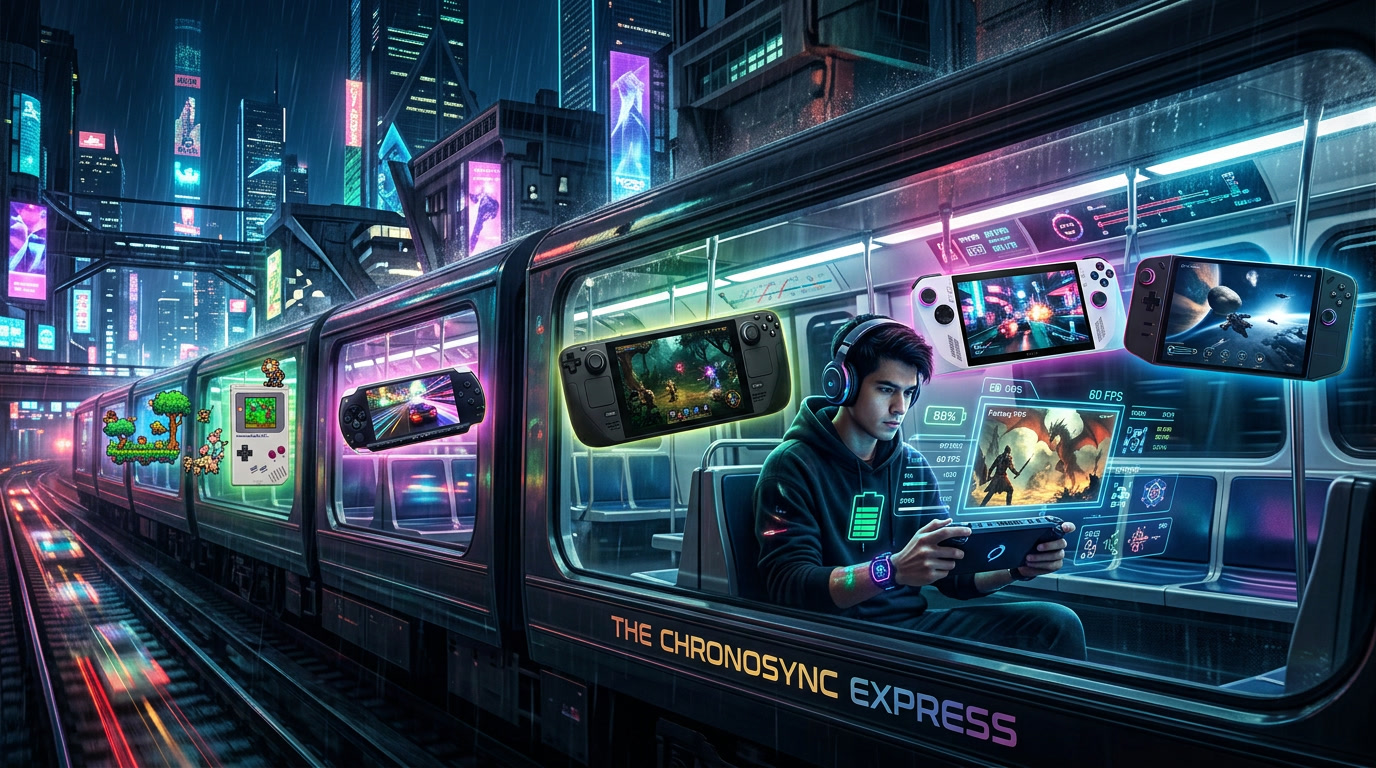
There’s something almost cinematic about the way handheld gaming PCs have evolved. We went from clunky Game Boys with gray screens to pocket-sized machines that can run open-world titles at high settings — and you can take the whole thing on a train. The rise of handheld PCs hasn’t just changed how we game; it’s quietly rewritten the rules of what “PC gaming” even means.
I’ve been testing gaming hardware for years now, and if you ask me what the real USP of a handheld gaming PC is, the answer is simple: portability without compromise. You slip one of these into your backpack, and suddenly your whole rig comes with you. HD graphics, solid frame rates, immersive audio — all of it, no desk required.
If you’re curious about how far the hardware has come and the kind of experiences these devices are built to deliver, our piece on crossplay support across PC, consoles, and mobile gives some useful context on where the whole ecosystem is heading.
But first, let’s talk about what actually matters when you’re choosing one of these machines.
What to Think About Before You Buy
Buying a handheld gaming device is a lot more straightforward than spec-matching a full desktop rig, but there are still a few things worth thinking through before you pull the trigger.
Screen Size vs. Battery Life
Bigger screens are gorgeous. Better contrast, higher refresh rates, more visual real estate to enjoy those 3D game worlds in all their detail. But there’s a trade-off, and handheld devices make it unavoidable: a larger display eats battery faster. Just like your phone, these devices need charging, and a bigger panel will cut into how long you can game away from an outlet. So ask yourself honestly — do you care more about pushing visual fidelity, or stretching out long sessions without hunting for a charger?
Online Connectivity
Most handheld PCs handle offline gaming just fine. But if you want to install mods, jump into multiplayer, download updates, or grab new titles on the go, you’ll need a reliable connection. A stable internet setup makes a real difference — especially for anything live-service or community-driven.
Personally, I game on WOW! Internet. Besides a couple of handheld devices, all my gaming rigs are connected to this connection. Also, installing updates, making online purchases, or downloading new games wouldn’t be possible without a reliable connection.
That said, I believe finding a stable connection shouldn’t really be a problem today. You can explore nearby internet service providers (ISPs) that offer ample speeds or, if you’re looking for recommendations, contact WOW! customer service and subscribe to a suitable plan to enjoy a smooth gaming experience.
Processing Power
This is where people get burned most often. Handheld PCs are genuinely impressive machines, but not every device runs every game well. The smarter move is to figure out which games you actually want to play, then check whether the device’s specs can handle them. Things like game performance optimization matter a lot more on constrained hardware than on a beefy desktop, so matching your expectations to the hardware before you buy saves a lot of disappointment later.
The Best Handheld PCs in 2026
There’s no shortage of options right now, which is honestly a great problem to have. Here are the devices I think are worth your attention this year.
Asus ROG Ally X
If you want sheer power in a handheld form factor, the ROG Ally X is hard to argue with. It’s ergonomically one of the most comfortable devices in this category — the grip just feels right after long sessions — and the 80Whr battery is generous enough to get you through a serious gaming stint on a single charge.
The AMD Radeon 780M GPU paired with the Ryzen Z1 Extreme CPU handles demanding titles without breaking a sweat. If you’ve been wondering what AAA game development looks like running on portable hardware, this device gives you a pretty convincing answer.
| Spec | Detail |
|---|---|
| CPU | AMD Ryzen Z1 Extreme |
| GPU | AMD Radeon 780M |
| RAM | 24GB |
| Storage | 512GB SSD |
| Display | 7-inch, 1920×1080, 120Hz |
| Weight | 1.5 lbs |
| Battery | 80Whr |
MSI Claw 8 AI+
The MSI Claw 8 AI+ makes a compelling case for itself, mainly because of its 2TB SSD and 32GB RAM. That combination means you can keep a large game library installed without the constant juggling act of deleting titles to make room. It also has noticeably improved triggers and buttons compared to previous MSI handheld attempts — those small physical details matter more than people realize during extended play.
Battery life here also punches above its weight class for the price bracket. For developers thinking about how games feel on this kind of hardware, our look at how UX design drives player retention is worth a read — the principles apply just as much to handheld as mobile.
| Spec | Detail |
|---|---|
| CPU | Intel Core Ultra 7 258V |
| GPU | Intel Arc 140V |
| RAM | 32GB |
| Storage | 2TB SSD |
| Display | 8-inch, 1920×1200, 120Hz IPS touchscreen |
| Weight | 1.75 lbs |
| Battery | 80Whr |
Lenovo Legion Go S
The Legion Go S runs SteamOS, and honestly, that alone puts it in a different category for a lot of gamers. The Steam interface on handheld hardware just feels more intentional than Windows 11 — less like a desktop OS shoehorned into a small screen, more like something designed for the context. Powered by SteamOS, Legion Go S is a great alternative to the Steam Deck’s handheld PCs.
The 8-inch display at 120Hz is genuinely impressive for titles that benefit from smooth motion. It’s powerful enough to handle open-world heavyweights. If you’re interested in how games like Red Dead Redemption are designed to scale across hardware, the game porting services world has a lot to say about what that adaptation process actually involves.
| Spec | Detail |
|---|---|
| CPU | AMD Ryzen Z1 Extreme |
| GPU | AMD Radeon 780M |
| RAM | 32GB |
| Storage | 1TB SSD |
| Display | 8-inch, 1920×1200, IPS touchscreen, 120Hz |
| Weight | 1.61 lbs |
| Battery | 55.5Whr |
Steam Deck OLED
At 1.41 lbs, the Steam Deck OLED is the lightest device on this list, and the OLED panel genuinely earns its name. The colors are rich, the blacks are deep, and the overall feel of playing indie games or emulator titles on this screen is hard to describe without sounding hyperbolic. It just looks good.
The improved battery over the original Steam Deck is a welcome change. If you’re a fan of indie games especially, this device is arguably the most purpose-built experience for that genre. Our roundup of the best indie games has some strong candidates to start your library with.
| Spec | Detail |
|---|---|
| CPU | AMD Zen 2 |
| GPU | 8 RDNA 2 CUs, 1.6GHz |
| RAM | 16GB |
| Storage | 256GB / 512GB / 1TB SSD |
| Display | 7-inch, 1280×800, LCD/OLED, 60/90Hz |
| Weight | 1.41 lbs |
| Battery | 50Whr |
Retroid Pocket 5
The Retroid Pocket 5 is a different kind of machine. It weighs less than a pound, costs significantly less than the other devices on this list, and runs a 5.5-inch OLED display that looks genuinely beautiful for retro and emulator content. If you’re not trying to run the latest titles at max settings and just want a portable device that handles your backlog and older games with style, the Pocket 5 might be the most practical buy here.
It’s also the kind of device that pairs well with understanding the history of handheld gaming — our piece on retro game consoles gives a nice tour of how we got here.
| Spec | Detail |
|---|---|
| CPU | Qualcomm Snapdragon 865 |
| GPU | Adreno 650 |
| RAM | 8GB LPDDR4x |
| Storage | 128GB UFS 3.1 |
| Display | 5.5-inch OLED, 1080p, 500 nits, 60Hz |
| Weight | 0.62 lbs |
| Battery | 18.5Whr |
A Few Final Thoughts
Handheld gaming PCs have genuinely arrived. These aren’t compromised toys or travel curiosities — they’re real gaming machines that fit in a bag. The Asus ROG Ally X and MSI Claw 8 AI+ lead on raw power. The Lenovo Legion Go S makes the strongest case for OS-level polish. The Steam Deck OLED is hard to beat for indie and emulator fans. And the Retroid Pocket 5 proves you don’t need to spend a lot to carry something worth gaming on.
The gaming world continues to shift toward flexibility — play where you want, how you want, with whom you want. Handheld PCs are just the hardware side of that shift. If you’re a developer thinking about how your game feels on portable hardware, it’s worth exploring our PC game development services and thinking seriously about game porting as part of your launch strategy. The audience for these devices is only growing.
And if you want to dig into broader gaming trends shaping where things go next, our look at game trends for 2025 and beyond is a good place to keep reading.