
Independent game development has long been synonymous with innovation, exploration, and small numbers of people doing big things with little. But today’s gaming landscape is highly competitive. Today, gamers expect well-refined gameplay, fluid performance, platform support, frequent content updates, impressive visuals, and a solid launch, all from tiny studios.
This poses a problem for indie studios. They need to be fast, frugal, and fight for attention against major publishers and thousands of other indies. In this context, hiring veteran game developers is no longer optional. It’s often the difference between an idea and a viable product.
For development studios considering budgets, international payments, or even cryptocurrency-native business models, even tracking currency values like the USDT price can become a consideration in financial planning when engaging global contractors, marketplaces, or even Web3-adjacent gaming ecosystems.
The Indie Market Has Become More Competitive
Since 2015, the volume of games released on PC, consoles, and mobile has grown substantially. Online stores make it easier to publish games, but also more difficult to stand out. A great idea alone will not be enough if the game is buggy, unoptimized, or doesn’t retain players.
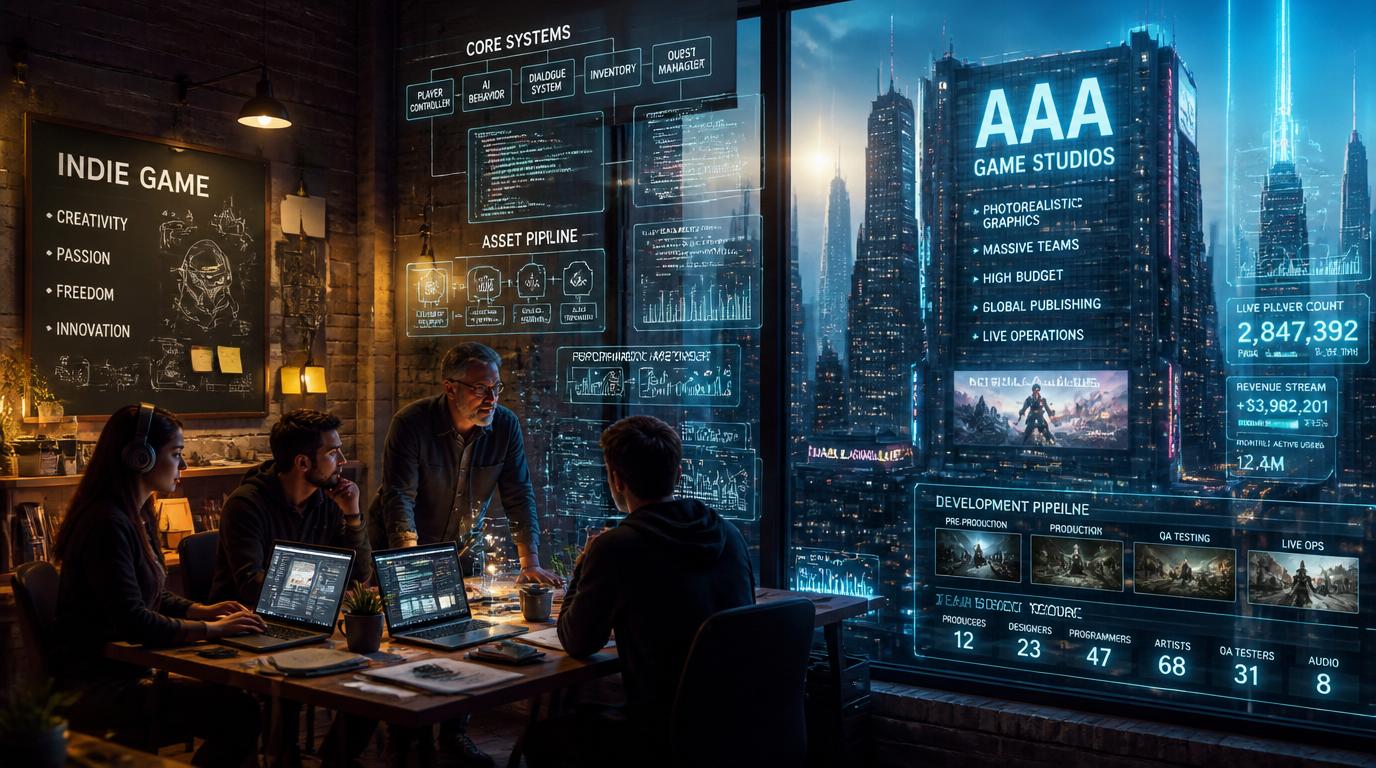
Senior game developers help indie studios rise above the competition with production smarts. They know when to prioritize work and cut it or put it on hold. This skill is critical when a studio is attempting to innovate without getting bogged down.
A senior developer can help answer critical questions early:
- Can the gameplay loop be implemented?
- Will the engine support the gameplay?
- Which systems need to be prototyped?
- What will cause scope creep?
- What performance issues might arise just before launch?
They can determine the future of a game.
Senior Developers Reduce Production Risk
Indie games are often on a tight budget. Time is a precious commodity. Any missed milestone, build break, or poorly thought-out system can be costly. Young developers may be passionate and capable, but they may not yet know to watch for technical debt or production holdups.
Experienced game developers lower risk by creating scalable systems. They know how to structure code, gameplay, and performance optimization, and ensure issues do not snowball. They also know about shipping, not just developing. This is a major distinction. Many developers can build a prototype. But it takes a senior developer to transform a prototype into a product. Experienced developers have the know-how to get the job done.
Small Teams Need Better Technical Leadership
In a large studio, technical leadership may be spread among engineering leads, producers, directors, QA specialists and platform specialists. In a small team, one senior developer might be expected to fill multiple roles.
So senior talent is precious. A senior developer can help define the architecture, mentor new developers, help choose tools, communicate with artists and designers, and ensure development aligns with business needs.
They may do more than just code. They may help with:
- Selecting engine and plugins
- Building internal tools for designers
- Code reviews and avoiding technical debt
- Supporting milestone planning
- Debugging difficult performance issues
- Preparing builds for publishing platforms
- Coordinating with external contractors
In a small team, this leadership role can bring stability to the entire production process.
Experience Matters When Scope Gets Dangerous
Scope creep is a major challenge for indie games. The team begins with a simple idea, but then adds more features, characters, levels, modes, quests, platforms and monetization schemes. Soon, the game is too big for the team and budget to handle.
Experienced developers are more likely to sense when ambition becomes deadly. They know how to take ideas and turn them into a product. That’s not to say they aren’t creative. On the contrary, they can often safeguard it by prioritizing the most important features.
For instance, the senior developer may suggest simplifying the inventory system, reusing level elements, pushing back development of multiplayer features, or switching to an existing framework. These decisions might not sound like much, but they can save months of development time.
Indie studios don’t need more features. They need the right features. Well done.
Modern Games Require Deeper Technical Expertise
Modern games can involve a lot more than gameplay code. Even modest-sized indie games can involve sophisticated systems including cloud saves, game controllers, localization, procedural content generation, analytics, multiplayer networking, accessibility, console certification and patches.
A senior game developer is well-versed. They know where potential issues lie and how systems fit together. This is particularly critical when using game engines such as Unity and Unreal, as technical decisions early in development can impact performance, process and platform compatibility later.
Technical depth matters for optimization, too. Players don’t expect a small team to have a huge art budget, but they don’t expect games to stutter, crash, or lose game data. Senior developers can help ensure performance is a consideration throughout the development project rather than a last-minute crisis.
Senior Developers Help Juniors Grow Faster
Indie studios don’t need to steer clear of junior developers just because they hire senior developers. Quite the opposite. Senior developers help junior developers by providing support, guidance and feedback.
Without direction from senior developers, junior developers may reinvent the wheel. They may produce code that works, but is hard to maintain. They may also make incorrect estimates or lack an awareness of how their work fits with the rest of the project.
A senior developer can facilitate learning by:
- Reviewing code constructively
- Splitting work to create tickets
- Setting engineering standards
- Explaining trade-offs
- Promoting better debugging practices
- Stretching the skills of junior engineers
This increases the teams skill levels.
Hiring Better Can Build Investors’ and Publishers’ Trust
Indie studios need to convince investors, publishers or platform developers that they will be able to deliver. They want to be sure the team can execute on a great game.
Experienced developers on the team are reassuring. It demonstrates the studio’s commitment to quality production, technical development and a readiness to ship. Publishers and investors know that junior teams can under-estimate. Experienced developers alleviate that risk.
They can also help provide more realistic production schedules, technical plans, milestone estimates, and vertical slices. These are often key items in pitching a game to partners.
The Cost of Senior Talent Can Be Lower Than the Cost of Failure
Indie studios often don’t want to hire senior talent because it is more expensive. And rightly so. There are financial constraints and senior staff are expensive.
But the question should not be about the cost of senior devs. It is whether the studio can do without them.
An ill-conceived project can burn money through rework, late starts, poor prototypes, bad builds, missed deadlines, and missed releases. Often, a single senior developer can save the studio much more than their hourly rate or contract price by avoiding mistakes.
Experienced developers can help a studio better manage contractors, assets, middleware and development tools. They’re not only valuable in what they create, but also in what they save.
Senior Talent Is the Indie Studio’s Secret Weapon
Indie studios face more challenges than ever. They want to make unique games on low budgets, please tough customers and compete in the market. Innovation is important, but it’s not the only thing.
Experienced game developers provide the technical skills, production know-how, and management needed by small teams. They manage scope, mitigate risk, coach teams, and elevate their performance, helping to bring their projects to completion.
For indie studios that want to play the game, senior developers are a necessity. They are an investment in the studio’s capacity to make, complete and release compelling games.