
When you walk through a casino or scroll through an online lobby, you see hundreds of games. On paper, many are identical—they might have the same return-to-player (RTP) percentages or the same number of lines. But we all know that one game we keep coming back to and the one we close after three spins.
The difference isn’t the math. The math—the Random Number Generator (RNG)—finishes its job in a split second before the reels even start to move. Everything you see and hear after that is “the show.” It’s a carefully crafted performance designed to turn a mathematical outcome into an emotional experience.
Why Your Ears Are Faster Than Your Eyes
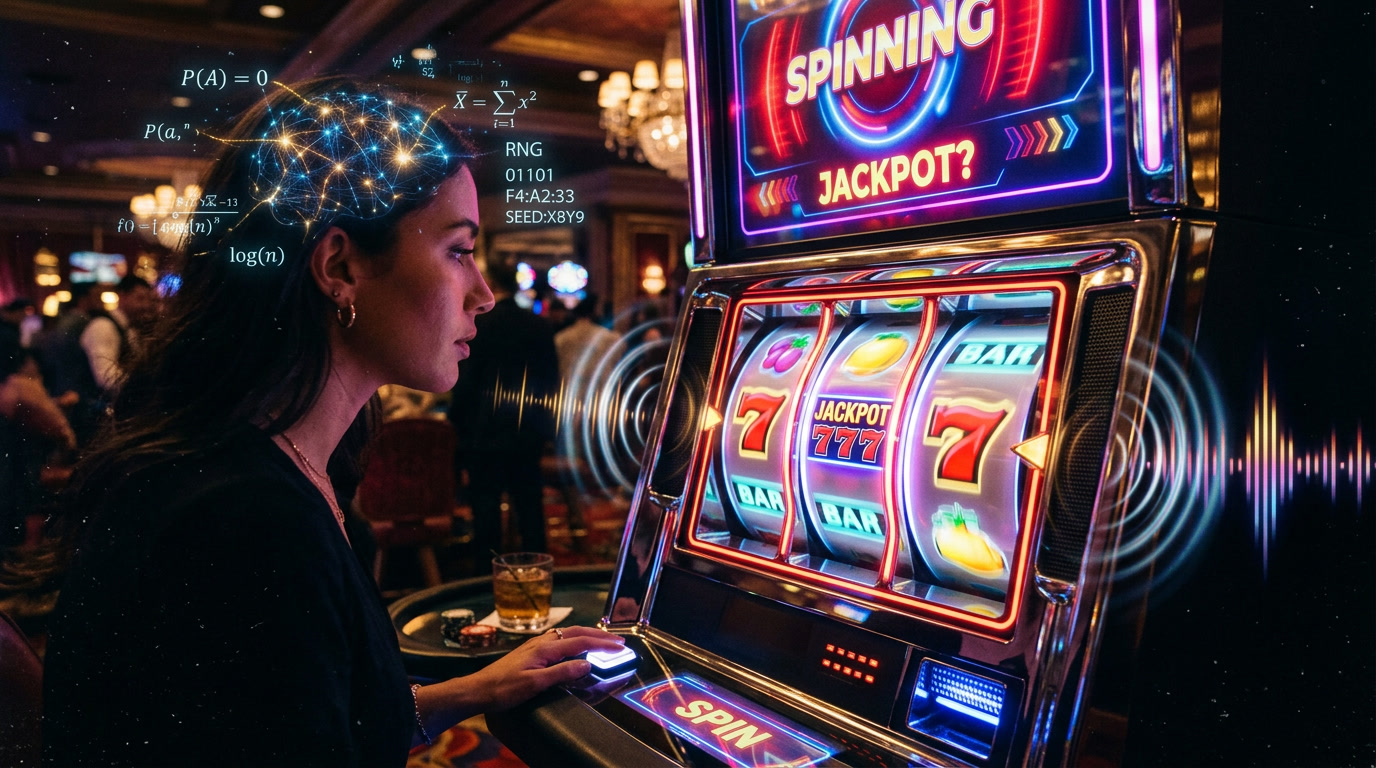
Sound is the most powerful tool a designer has, but it’s often the most misunderstood. We think we “watch” a slot machine, but we actually “listen” to it. Slot machine sound design research has shown that auditory cues can actually change how our bodies react to a game. It can speed up your heart rate and even change how you make decisions.
This isn’t just background music. In a great game, sound does three things:
- It primes the brain: You actually hear the “vibe” of a win before your eyes can even process the symbols.
- It creates a story: Since the result is decided instantly by a computer, the music creates the illusion that the story is unfolding right now, in real-time.
- It sets the mood: From the ambient “hum” of the background to the celebratory bells of a jackpot, sound creates an environment where you feel comfortable staying for a while.
Reel Stops and the Grammar of Revelation
Have you ever wondered why the reels stop one by one? It’s not a technical requirement; it’s a storytelling choice. By stopping the reels from left to right, the game builds a tiny, two-second thriller every time you hit the button.
Classic reel architecture breaks every spin into three distinct emotional beats:
| Stage | What’s Happening | The Player’s Perspective |
| The Setup | The first reel clicks into place. | “Okay, I’ve got a match. This could be something.” |
| The Build-up | The middle reel settles. | The tension peaks. The world of possibilities gets smaller and more exciting. |
| The Reveal | The final reel stops. | The “Aha!” moment. Whether you win or lose, the tension is released. |
Your brain is hardwired to look for signals in this rhythm. This is why a simple three-reel game feels so much more “intense” and compressed, while a five-reel game feels like a longer, more layered journey.
When players want to get serious about how these different layouts affect their wallet, they often look for experts who can break down the facts. For example, investigating whether does quick hit slots pay real money is a common path for players who want to move past the flashy lights and understand the actual mechanical payouts and verified structures behind the screen.
The Near-Miss Problem
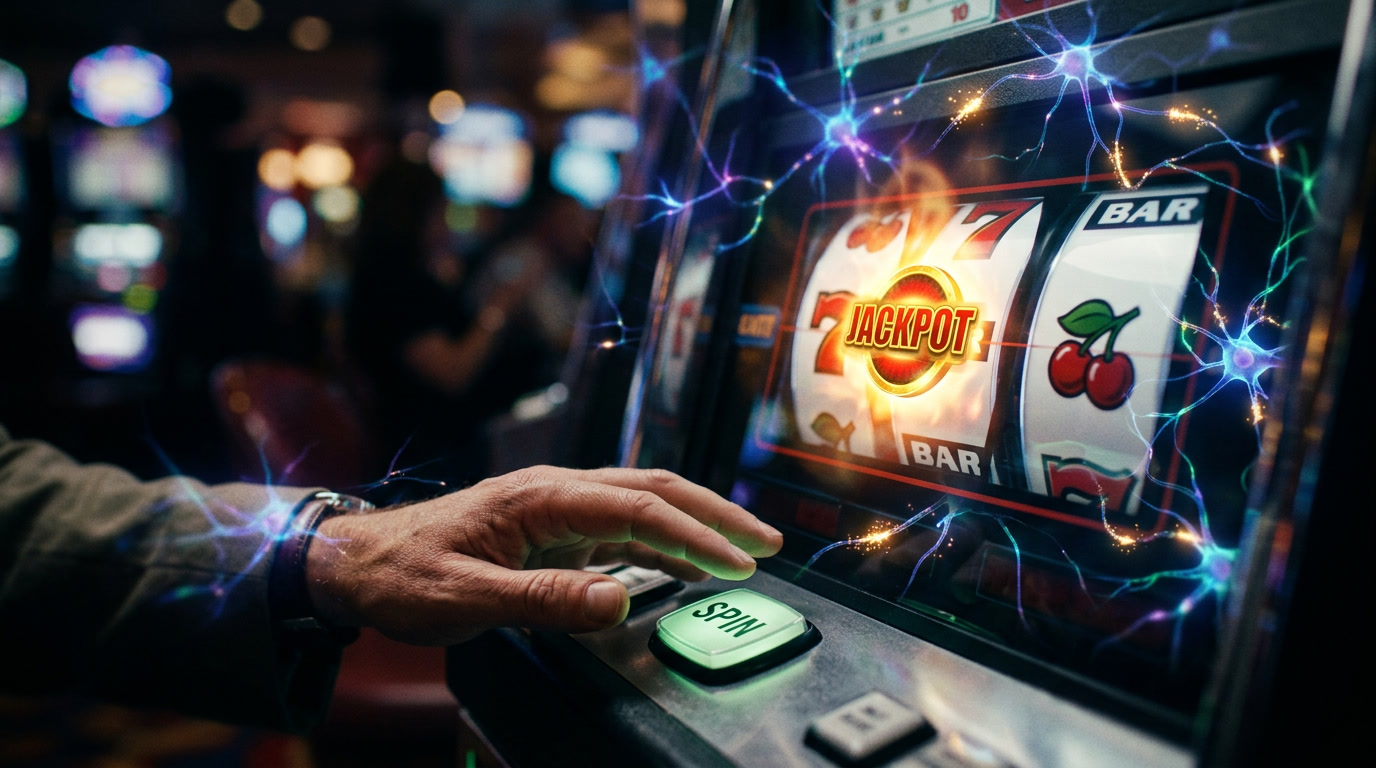
The “near-miss” is perhaps the most fascinating—and controversial—part of game design. We’ve all been there: you need one more 7 to hit the big win, and it lands just one tiny inch above the line.
It feels like you were “so close,” but mathematically, you weren’t any closer than if the symbol hadn’t appeared at all. However, near miss gambling psychology shows that our brains can’t tell the difference. On a neurological level, a near-miss feels almost exactly like a win. It releases the same “feel-good” chemicals, which is why it’s so tempting to go for one more spin immediately after.
Silence, Cascade, and the Convergence of Slot Systems
Great games aren’t just a collection of random sounds and bright colors. They are “composed” like a movie or a song. Professional slot game design mechanics prove that the best studios develop the sound, the timing of the reel stops, and the animations all at once.
If the “ding” of a win happens even a fraction of a second before the symbol lands, it feels “off.” You might not be able to explain why, but you’ll feel a sense of discomfort. That level of precision is what separates a legendary game from a forgettable one.
Signature Versus Formula
At the end of the day, any developer can follow a formula. They can pick an RTP, set the volatility, and buy some stock art. But a “signature” game is different. It’s a game you can recognize from across a crowded casino floor just by hearing three notes of the bonus theme.
That “stickiness” comes from a thousand tiny decisions:
- The “Formula” is what you see on a spreadsheet (math and certifications).
- The “Signature” is what stays in your memory (the sensory fingerprint).
Designers are constantly walking a fine line between creating a fun, artistic experience and using psychological tricks to keep people playing. As a player, you don’t see the maps or the logic puzzles hidden inside the machine—you only feel the experience. And when that experience is designed with care, it feels less like a computer program and more like magic.
The Undrawn Line
Where the industry declines to draw a clear line, and where it has strong structural reasons to keep that line undrawn, is the boundary between experiential craft and behavioral engineering, because the instruments on both sides of that boundary are the same ones: the near-miss cadence, the deceleration curve, the moment of held silence before the last reel stops. Each can be used with care or without it, and the person at the machine carries no map of the design decisions stacked inside the experience they are having, only the experience itself, constructed to feel like something it may or may not actually be.